-
 Login or
Register
- Call Us +44(0)207 148 03 22
Login or
Register

I had a conversation with a seller recently that has stayed with me. Partway through, she told me she had lost £200,000. I was genuinely taken aback and asked how anyone loses that kind of money, half joking that she surely hadn't left it on the bus. She hadn't. At the start of the year an agent had valued her home at £1,000,000. Nine months later it was still on the market, she had reduced the price twice, and she was now preparing to accept an offer of around £800,000.
What struck me was not the number itself but the way she spoke about it. I could hear real pain in her voice, the kind that comes from losing something you believed you owned. And yet, when you look at it closely, she never had the £200,000. No buyer had ever offered it, no lender had ever measured against it, and the market had never once confirmed it. It existed in one place only: a valuation she had been given, believed, and carried with her for the best part of a year.
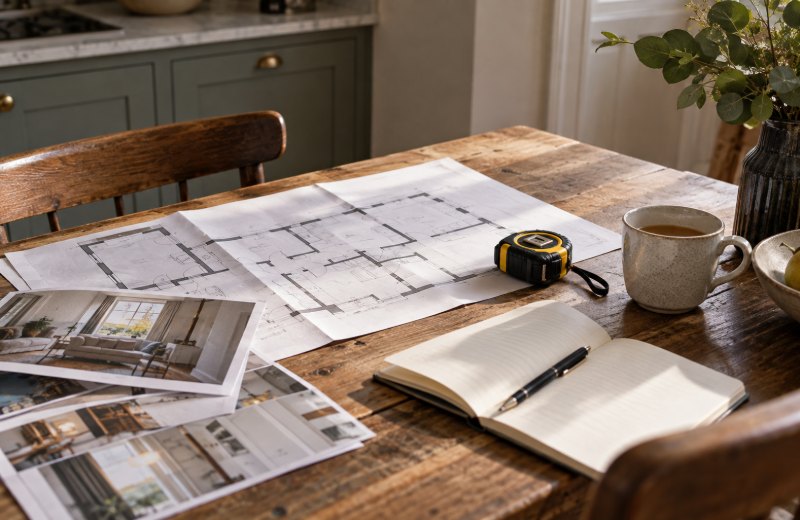
A good valuation is not plucked from the air. It rests on evidence: recent sales of comparable homes, what is on the market now and how quickly it is moving, the layout and condition of the home itself, and how much demand there is at that level. Done properly, that research can draw a map that sits very close to the territory. But it is still a map. Recent sales have historic value, and the buyer a seller needs will not be found in the record books. They are in the market today, looking at whatever else is available alongside your home.
That is where judgement comes in, and why valuation is as much an art as a science. A valuation is ultimately a prediction about how that present-day buyer will respond, and the first weeks on the market are the real test of it. A well-judged price draws attention quickly, from buyers and from the agents talking to them. A home that sits quiet while similar homes around it are attracting viewings is receiving a clear answer, whatever the wider economy happens to be doing. However careful the research, a home is never worth a penny more than the best offer from the best buyer available at the time.
This is also why two agents can stand in the same kitchen and arrive at very different figures. The gap usually lies less in the evidence than in how it has been read, and sometimes in what the figure is for. A higher number can be right, because the agent has seen something in the home that others missed and has a clear idea of who will pay for it. It can also be a figure set high to win the instruction, in the knowledge that the price can be brought down later. That practice is more common than our industry likes to admit, and it is always the seller who pays for it. From the seller's side of the table, the two can look exactly the same.

The difficulty is that the first number we hear does not stay neutral for long. It quietly becomes the reference point against which everything else is judged, and from then on the mind does a surprising amount of work to protect it. I suspect that is what happened over those nine months. Homes like hers were listed at similar prices, and she noticed every one of them. What she was less inclined to notice was that many of those homes were not selling either. The evidence that supported her number was easy to see, while the evidence against it simply dropped out of view.
The price reductions told a similar story. To her, each one felt like money being taken away, a loss measured against the £1,000,000 she had come to think of as hers. A buyer would read the same reductions very differently, as the market slowly correcting a forecast that had been too optimistic from the start. Underneath it all sat a quiet assumption that is very easy to make: an experienced agent had said the home was worth £1,000,000, so that must be what it was worth. None of this is foolish. It is how people naturally hold on to a belief once someone they trust has handed it to them, and it happens to clever, careful people every day.
I suspect something else was at work too. Part of her wanted to sell and get on with the next chapter of her life. Another part wanted the number to be right, because accepting less would mean admitting it had never been real. When those two wants pull against each other, a seller can hold on to a price long after the market has answered. It is not stubbornness. Letting go of the number simply feels like losing something twice.
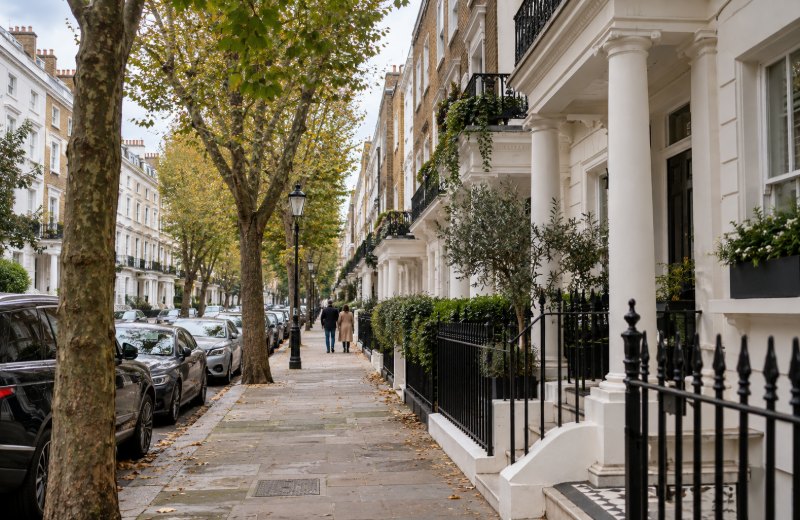
If the only cost were disappointment, this would be a smaller story. The more serious cost is what time on the market does to a home. In its first few weeks a property is at its most interesting, and buyers look at it with fresh eyes. Those buyers also search within price bands, so a home asking £1,000,000 is compared with everything else around the million-pound mark. If it belongs lower down, it spends months beside homes that are larger, better finished or better placed, and can end up doing more to sell its neighbours than itself. When the price then falls in steps, each reduction tends to invite a lower offer rather than a quicker one.
It is worth being honest about what the £200,000 is made of. Part of it was the gap between the valuation and the market from the first day. Part of it was the market moving over those nine months, as markets do, leaving an overpriced home chasing a target that kept moving away. But there may be a further loss, and it is the one her own account left out. Had the home launched at a price close to what the market was saying, it would have met the right buyers while it was still new, and it is quite possible it would have achieved more than the £800,000 she now expects to accept. The valuation she trusted was a map and the market was the territory. The further apart the two were, the more the journey between them cost, and that is money that was genuinely lost.
This is not a story about price alone, either. A realistic figure works best alongside marketing that knows who the home is for and introduces it to them properly. Price decides which buyers see the home, but positioning shapes how they feel about it once they do. For a home that has already sat too long, another reduction rarely changes the outcome on its own, and a considered relaunch is often the better route. I have written about that in more depth in Don't Just Change Agent. Change the Strategy.

None of this means sellers should distrust a high valuation, or choose the lowest figure to be safe. That would only swap one mistake for another. The better approach is to treat every valuation as an argument rather than an answer, and to pay close attention to the thinking behind it. An agent who can explain who is likely to buy your home, what that buyer will be comparing it with, and how it needs to be presented to stand apart is offering you a strategy. An agent who offers a confident number supported by little more than a handful of nearby listings is offering you a hope.
The most useful questions are often the simplest. What is this figure based on, and who do you expect to pay it? What happens if the market has not agreed within the first few weeks? A good valuation can feel slightly uncomfortable, in the way honest advice often does, because it accounts for the buyer as they really are rather than the buyer you would like to imagine. When an agent is willing to tell you something you would prefer not to hear, it is usually a sign they are thinking about your sale, not just your signature.
Where you stand changes what this means for you. If you are thinking of selling, the time to apply it is before you settle on a figure, while every option is still open. If your home is already on the market and the response has been quieter than you were led to expect, those first weeks have already given you evidence, and it deserves to be listened to rather than explained away. And if you took your home off the market after it did not sell, it is worth knowing that the number which held it back can be reset. A home that returns at a realistic price, with a clear sense of who it is for, is seen by most buyers as a new opportunity rather than an old one.

When I think back to that conversation, what stays with me is how real the loss felt to her, even though the money had never existed. The most expensive number in a sale is rarely the final offer. It is the first figure a seller hears and comes to believe, because everything that follows, from the launch price to each reduction to the offer they eventually accept, is measured against it. She did not lose £200,000. What she lost was nine months, a good deal of peace of mind, and very possibly part of the price a realistic launch could have achieved.
So before agreeing to any figure, it is worth asking yourself a question that rarely comes up in a valuation meeting. If the market disagrees with this number, how long will I wait before I believe the market? For many sellers, an honest answer to that question is worth more than the valuation itself.
If you have been given a valuation and are unsure what it is really based on, your home is on the market and the numbers are not adding up, or you have taken it off the market and are wondering what comes next, a short conversation can bring clarity.
No pressure.
No obligation.
Just perspective.
0207 148 0322
[email protected]

Danny Valencia
Property Adviser | Behavioural Property Insights
Helping London homeowners make better property decisions for over 15 years.