-
 Login or
Register
Login or
Register
- Call Us +44(0)207 148 03 22
Login or
Register

Most homeowners assume that the difficult part of selling is deciding what their property is worth.
I’m not sure it is.
After many years of sitting around kitchen tables discussing value with owners, landlords and investors, I’ve come to think the harder question is deciding what part of that value belongs to the property, and what part belongs to you.
The two are surprisingly easy to confuse.
A house can contain twenty years of birthdays, Christmas mornings, children measuring their height against a door frame and Sunday afternoons in a garden that has slowly matured alongside the family.
But attachment doesn’t only come from living somewhere.
For a landlord or investor, it may come from something different: the deposit originally put down, the refurbishment undertaken, years of mortgage payments, difficult tenancies navigated, improvements made and the simple fact that the property has been part of their financial life for a long time.
None of those things appear on a floorplan.
Yet they inevitably influence how an owner feels about the property and, more importantly, what they believe someone else should be prepared to pay for it.
This is one of the strange contradictions of selling property. The things that make it valuable to us personally, whether emotionally or financially, are often completely different from the things that make it valuable to a buyer.
And understanding that difference is one of the most important parts of selling well.
Economists have long recognised something called the endowment effect. Put simply, we tend to value something more highly simply because we own it.
Property may be one of the clearest examples.
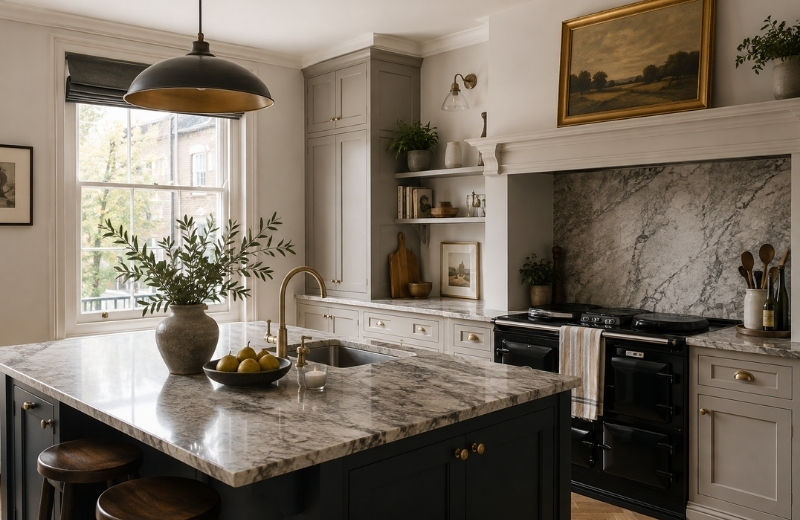
A seller remembers the £40,000 kitchen renovation, the months spent choosing the stone worktop and the upheaval involved in getting it finished. A buyer walks in and thinks the units are slightly too dark.
A landlord may remember buying the property fifteen years ago, replacing the boiler twice, refurbishing between tenancies and carrying the cost during quieter periods.
Both may understandably feel that the history of that investment should count for something.
The seller remembers transforming the garden from an overgrown patch of grass into somewhere the family has spent countless summer evenings. A buyer wonders whether there is enough space for a garden office.
Neither person is wrong.
They are simply valuing different things.
This matters because owners occasionally expect the market to reimburse them not only for what they have created, but also for the experience, effort or capital involved in creating it.
Markets don't work like that.
A renovation may increase value enormously, but not necessarily by the amount spent on it. A beautifully designed interior can create stronger demand, but buyers won't compensate an owner for every invoice. A property bought twenty years ago may have enormous emotional significance to a family, or financial significance to an investor, but the person standing in the hallway at a viewing is seeing it for the first time.
The buyer has no access to the seller's memories, history or balance sheet.
They can only judge the opportunity in front of them.
This is why I believe one of the most important moments in a property sale happens before the photographs are taken and before the asking price appears online.
The owner has to make a small psychological transition.
They have to become a seller.
That doesn't mean becoming cold or detached from the property. Quite the opposite. Some of the best property marketing starts by understanding what made a home special to the people who lived there, or what made an investment work for the person who owned it.
But a seller has to learn to look at the same property through somebody else's eyes.
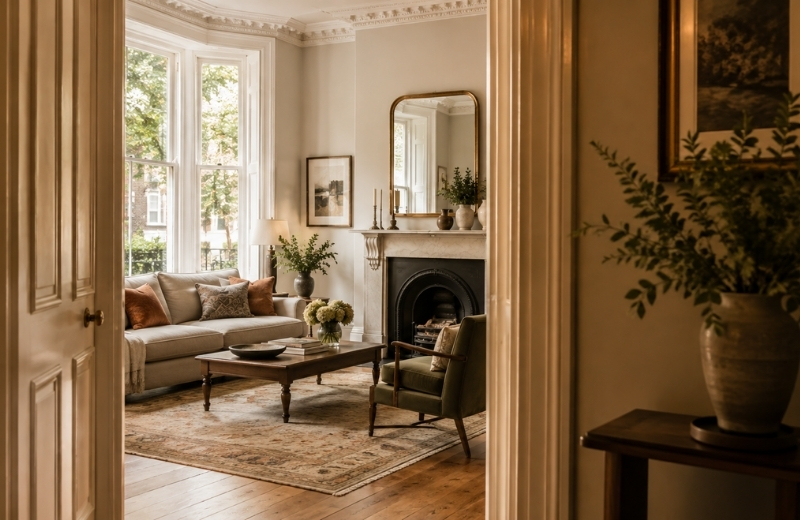
The spare bedroom that has gradually become a storage room may need to become a bedroom again. The enormous dining table that has hosted Christmas for fifteen years may make the room feel smaller in photographs. The collection of furniture accumulated over decades may feel perfectly normal to the owner, while making it difficult for a buyer to understand the proportions of the property.
For a landlord, the equivalent might be assuming that a property which has rented successfully for years will automatically appeal to an owner-occupier in the same way. A dependable rental investment and an emotionally compelling home are not always presented in the same way, even when the underlying property is identical.
These aren't criticisms of the property.
They are questions of perspective.
There is an important distinction between presenting a property as it has been lived in or operated, and presenting the possibilities of how somebody else might live there.
Good property marketing lives in that gap.
You see the same psychology when a property has been on the market for several weeks.
Imagine a seller launches at £950,000.
There is interest, but not quite enough. Several buyers view. One thinks it needs too much work. Another prefers a neighbouring road. A third likes it but believes comparable properties offer better value at around £900,000.
The natural reaction is often defensive.
But ours has a bigger kitchen.
The one down the road doesn't have our garden.
We spent £70,000 refurbishing this.
For a landlord, it might sound slightly different.
But the property has always rented immediately.
I’ve spent a significant amount maintaining it.
The yield has always been strong.
Again, those statements may all be true.
But property markets aren't competitions for architectural or financial justice. Buyers don't work through a spreadsheet awarding points for every improvement, every year of successful ownership or every problem the seller has solved along the way.
They compare.
And comparison is rarely perfectly rational.
A buyer may happily pay more for a smaller property because the light feels better. They may prefer another street because the walk from the station feels more pleasant. They may choose a less impressive house because they can immediately imagine where the sofa will go.
An investor may make a completely different calculation, placing greater weight on yield, service charges, lease length, future maintenance or the potential for capital growth.
This is where property becomes as much about psychology as square footage.
Value isn't created solely by what something is. It is influenced by how easily another person can understand why they should want it.

There is something about the transition from summer into autumn that often changes how people see their homes and property decisions.
Perhaps it is simply that routines return. Holidays finish, schools restart, evenings begin drawing in and people spend more time inside.
The house becomes noticeable again.
The kitchen that felt adequate suddenly feels crowded. The commute that was tolerable begins to feel repetitive. The empty bedrooms in a large family house become more obvious once children have left home. For someone else, the opposite happens. A flat that once felt perfectly spacious suddenly seems less suited to a growing family.
For landlords, the reflection may be different. Another tenancy comes to an end. A mortgage product is approaching renewal. Maintenance costs have increased. The return that once felt comfortably worthwhile no longer looks quite the same against other options.
Nothing dramatic has necessarily happened to the property.
Life, priorities and circumstances have moved.
And sometimes it takes a change of season to make us realise that the property which suited one chapter may not be the property we want to carry into the next.
That realisation can be uncomfortable because selling requires us to hold two ideas at the same time.
You can love a home and still decide to leave it.
You can have owned a successful investment for many years and still conclude that the time has come to sell.
You can believe a property is special while accepting that the market may value it differently from you.
You can be grateful for everything that property has given you, emotionally or financially, without requiring the next buyer to pay for that history.
Those aren't contradictions. They are part of making a good decision.

This is also where I think the role of a good property adviser is often misunderstood.
Sellers understandably want enthusiasm. They should.
If someone is representing your property, you want them to recognise what makes it exceptional and communicate that conviction to buyers.
But enthusiasm without perspective isn't advice.
If three agents suggest that a property is worth somewhere around £900,000 and a fourth promises £1m, the highest figure can feel like the most optimistic assessment of your property.
Sometimes it will be justified.
Sometimes it is simply the figure you most wanted to hear.
There is a difference.
A good adviser has to understand the emotional or financial value attached to a property while remaining sufficiently independent of it to interpret what the market is saying.
That occasionally means challenging the seller.
It can mean explaining that the photography isn't communicating the quality of the property. It can mean recommending that furniture is moved, rooms are restyled or the marketing strategy is changed. For an investment property, it may mean reconsidering whether the current presentation is speaking to the right type of buyer at all.
And sometimes it means having the more difficult conversation about price.
Not because reducing a price is automatically the answer. It isn't.
But because evidence is more useful than reassurance.
The purpose of advice isn't to confirm what someone already believes. It is to help them see something they might struggle to see from where they are standing.

There is a temptation to think that accepting the market's opinion somehow diminishes the property or the years invested in it.
It doesn't.
A buyer offering £800,000 rather than the £850,000 you hoped for isn't placing a value on your family's experience, nor are they assessing whether the years you spent owning, maintaining or letting the property were worthwhile.
They can't.
They are valuing the property according to their finances, alternatives, aspirations and perception of the market at that particular moment.
The memories, effort and history belong to a completely different balance sheet.
Perhaps that is the healthier way to think about selling.
The market gets the bricks, the rooms, the garden, the postcode, the income potential and the opportunity.
You keep everything that made the property valuable to you.
And once you separate those two things, many of the decisions surrounding a sale become clearer. Presentation becomes less personal. Feedback becomes information rather than criticism. Pricing becomes a strategy rather than a judgement.
Most importantly, selling begins to feel less like giving something up and more like deciding what comes next.
Because a successful property sale doesn't require you to stop caring about what you own.
It simply requires you to learn to see it twice.
Once for everything it has meant to you.
And once for everything it could mean to someone else.
If your home is on the market whether it’s a period conversion, a mews, a listed building, or something quietly unique — and you’re unsure whether it’s being positioned at the level it deserves, a short conversation can bring clarity.
No pressure.
No obligation.
Just perspective.
0207 148 0322
[email protected]

Danny Valencia
Property Adviser | Behavioural Property Insights
Helping London homeowners make better property decisions for over 15 years.